Decide what the translation needs to do
A workplace translation should help its intended readers take the same action or understand the same information as readers of the original. Before translating, identify the audience, the document’s purpose and any terms that must remain consistent. A customer email, an internal procedure and a product description may all need different levels of formality, even when they discuss the same subject.
Decide who will approve the result and what level of review is appropriate. A low-stakes meeting summary might need a quick check by a bilingual colleague. A safety instruction, contract or policy can require a specialist review rather than relying on an AI draft and an informal sign-off. If the team cannot arrange the review a document needs, delay publication or narrow its use instead of presenting the translation as verified.
Prepare a clean source and protect sensitive information
Start with a final or clearly labeled source version. Remove comments that are not part of the document, resolve ambiguous wording where possible and keep headings, lists, tables and links easy to identify. If the original says “submit the form by Friday,” for example, check whether the reader will know which Friday is meant. Translation is a poor way to fix unclear source instructions.
Before entering text into an AI tool, check your organization’s rules and the tool’s settings for handling submitted content. Avoid uploading personal details, confidential plans or customer information unless the tool and its approved use allow it. Where practical, replace names and identifiers with placeholders that can be restored during review. Keep a copy of the source, the translation draft and the approved version so reviewers know which text they are checking.
Give the AI a constrained first-draft task
Tell the tool the source and target languages, intended audience, desired tone and terms that should be translated consistently or left unchanged. Ask it to preserve the document’s structure and to flag phrases it cannot interpret confidently rather than guessing. A useful request might say: “Translate this internal onboarding guide into Spanish for new employees. Preserve headings and numbered steps. Keep product names unchanged. List ambiguous source phrases separately.”
Treat the output as a draft, not a certification of accuracy. AI can produce natural-sounding sentences while changing a condition, dropping a negative or smoothing over an unclear instruction. It may also use a term that is understandable but unfamiliar to the intended audience. For a long document, work in labeled sections and provide the same terminology guidance for each one. Keep the source beside the draft so changes can be checked against it.
Review meaning before polishing style
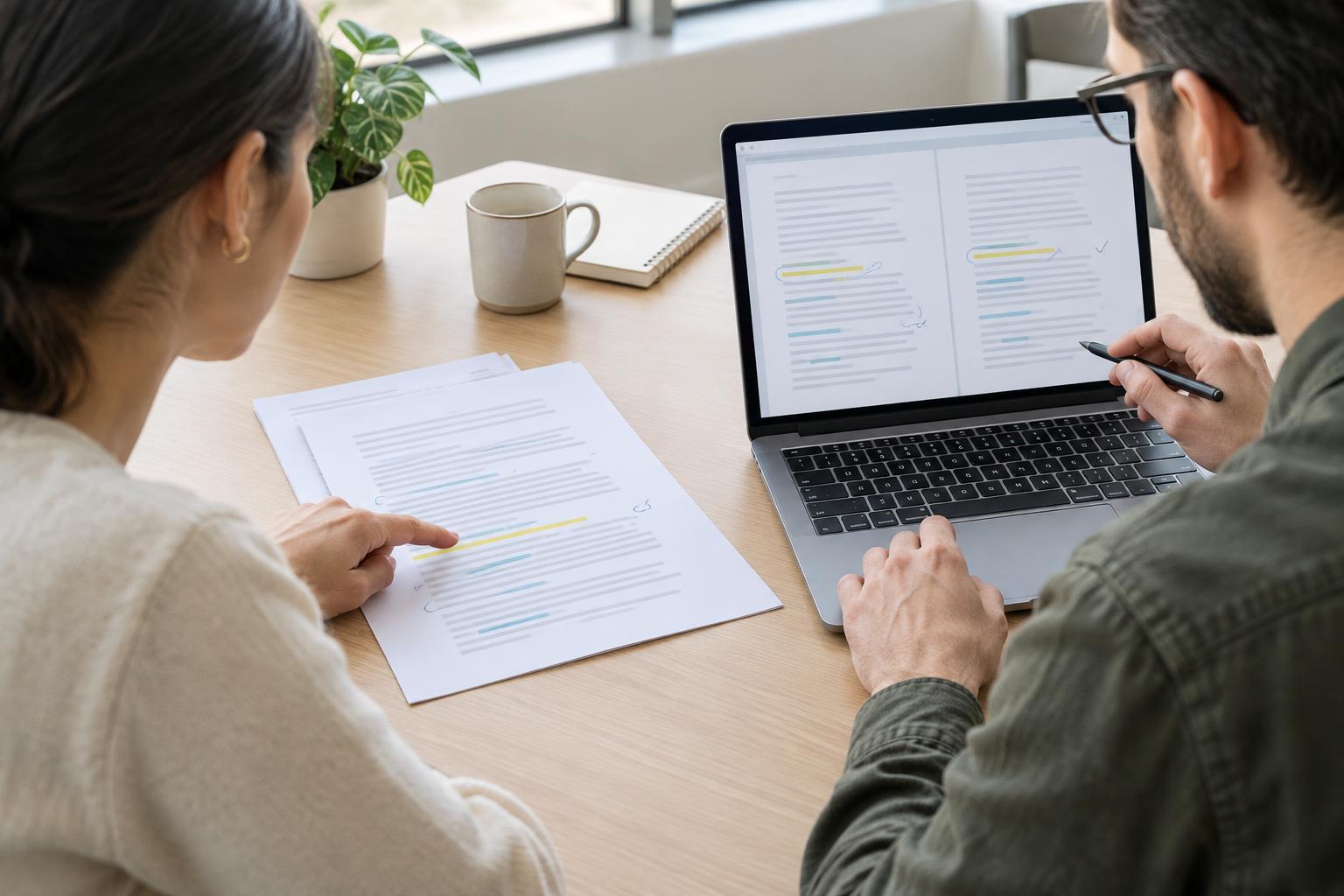
Have a reviewer who can read both languages compare the draft with the source, sentence by sentence where the details matter. Ask them to check who must do what, when it must happen and whether any limits or exceptions survived the translation. Numbers, units, names, links, warnings, negatives and conditional words such as “only” or “unless” deserve particular attention. Fluency alone does not show that these details are correct.
Next, review whether the wording suits the audience. Does a recurring term mean the same thing throughout? Is the tone appropriate for a workplace message? Could a translated label confuse someone trying to find a button that appears in another language on screen? Record preferred terms and decisions in a short glossary, especially if several people will translate related documents. The reviewer should make or approve edits directly; asking the AI whether its own translation is accurate is not a substitute for an independent bilingual check.
Check the finished document and make ownership clear
After revisions, inspect the document in its final format. Text can expand or contract across languages, breaking tables, cutting off labels or separating a heading from the instruction it introduces. Check that links lead where the text says they lead and that placeholders have been replaced correctly. For documents people will use to complete a task, a brief read-through from the reader’s perspective can reveal confusing steps that a sentence-level review missed.
Name a person responsible for final approval and retain the approved source and translated versions together. If the source changes later, mark the translation for review rather than assuming it remains accurate. This process does not require every workplace document to become a large translation project. It gives the team a repeatable way to use AI for speed while keeping responsibility for meaning, privacy and publication with people.