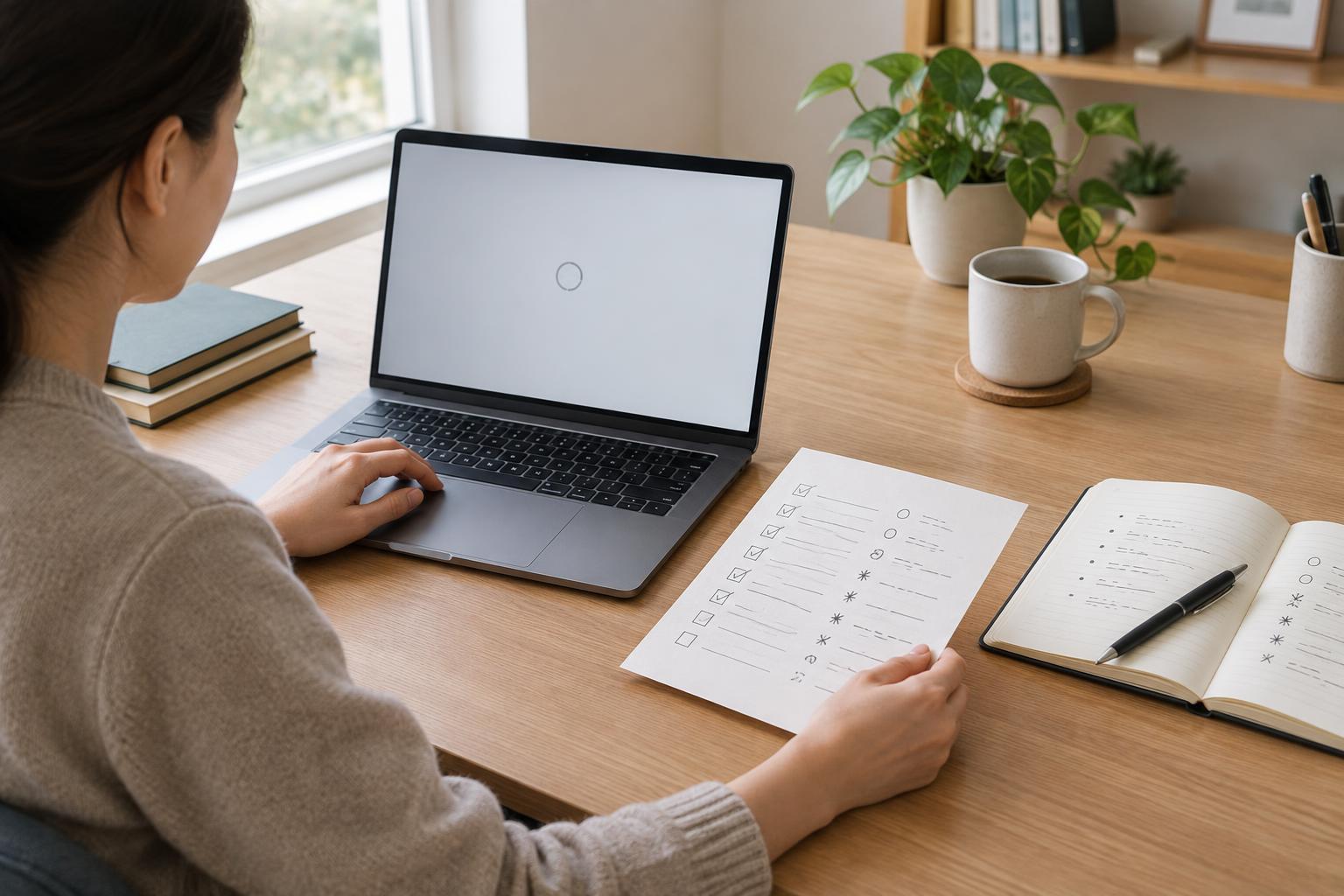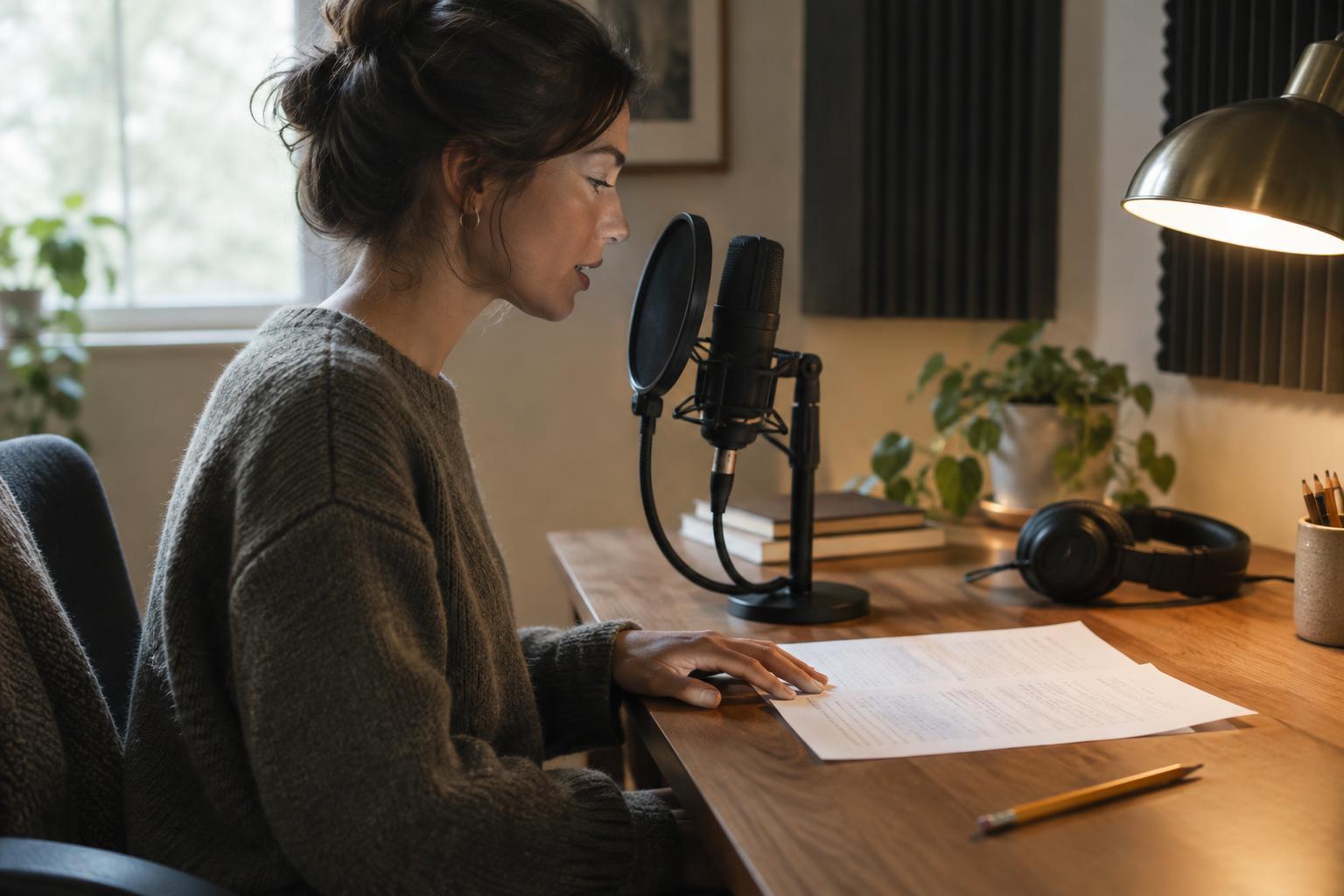
Start with the listener and the speaker
A natural voiceover is a conversation with a listener, even when only one person speaks. Before writing, decide who will hear it, what they already know, and what they should understand or do afterward. Then decide who is speaking. A calm product guide, an enthusiastic creator, and a thoughtful documentary narrator may explain the same idea in different words. If you cannot describe the speaker’s manner in a sentence, the draft may drift between styles.
Write a brief that names the format, intended audience, core message, approximate duration, and desired tone. Add any words that must appear exactly as written, such as a product name or call to action. Treat duration as a constraint to test, not a promise that a particular word count will always fit: speakers vary, and pauses take time. If the script accompanies visuals, note what the viewer can already see so the narration does not repeat every detail on screen.
Write for the ear instead of the page
Readers can stop and reread a dense sentence. Listeners usually cannot. Give each sentence one main job, put the important idea early, and use familiar words where they carry the meaning. Contractions often sound more conversational, though they may not suit every brand or speaker. A sentence that looks incomplete in an essay can work well in a voiceover if its meaning is clear when spoken.
Transitions matter because listeners need to hear how ideas connect. Simple phrases such as “Here’s the catch” or “That’s where the next step helps” can orient them without sounding like a formal outline. Avoid stacking several numbers, unfamiliar terms, or qualifications in one breath. If those details are essential, separate them and give the listener a moment to absorb each one.
For example, “The application facilitates the rapid organization of project assets” may be accurate but hard to say naturally. “It helps you put your project files in order” is easier to hear. Neither version is universally better; the right choice depends on what the audience needs to know and how the speaker would actually say it.
Use AI to explore options, not to decide your voice
An AI writing tool can turn a brief into a first draft or offer alternate openings and transitions. It is most useful when you give it boundaries. Try a request like this: “Draft a 60-second voiceover for first-time users of a project-planning app. The speaker is warm and direct, not salesy. Explain that users can collect tasks in one place and choose a next step. Use short, speakable sentences. Leave room for a pause before the final invitation. Do not invent features or testimonials.” Replace those details with your own verified brief.
Ask for several versions of a difficult passage rather than repeated rewrites of the whole script. You might request a quieter opening, a simpler explanation of one feature, or a closing line that does not pressure the listener. Compare the options against the speaker’s real vocabulary. AI can produce fluent wording, but fluency does not confirm that a claim is true, a tone fits your audience, or a line feels comfortable to perform.
Revise with a read-aloud test
Read the draft at the pace you expect to record, ideally while watching a rough cut or storyboard if visuals are involved. Mark every place where you stumble, run out of breath, or lose track of the point. Those marks are useful editing notes, not performance failures. Break long sentences, move a key word closer to the start, or replace a phrase you would never say in conversation.
Listen for sound as well as meaning. Similar-sounding words close together can blur; repeated sentence shapes can make the delivery feel mechanical. Check names and technical terms with the people who own them, and write pronunciation guidance separately if the speaker needs it. Pause at major changes of thought. Rather than filling the script with detailed acting directions, use a few clear cues where timing or emphasis matters.
If possible, record a rough take and listen without looking at the page. Ask whether the message makes sense on its own and whether the important line has enough space around it. Revise the script before trying to fix every awkward moment through delivery. A well-placed simpler phrase often helps more than asking the speaker to sound more natural.
Make one final pass for trust and usefulness
Before recording, check every factual statement against information you can verify. Remove invented customer reactions, unsupported superlatives, and promises the product or project cannot reliably keep. If you use an AI tool, avoid entering private client material or unpublished details unless your workflow permits it. You can often test a tone or structure with placeholder information and add approved specifics later.
Finally, ask what the listener should remember after one hearing. If several ideas compete for that spot, narrow the script. A natural voiceover is not merely casual wording: it is a clear message shaped for a human voice, a listener’s attention, and the time available.