Start by asking what the number measures
A claim about “AI’s footprint” might refer to training a model, running it for users, manufacturing its hardware, or operating the data center that houses it. Those are related but different activities. Before accepting a number, look for its boundary: which activities are included, over what period, and for which system?
Training is a concentrated computing task, but a model that serves many users also consumes electricity during inference—the process of producing responses. A training total cannot describe every future use of a model. Conversely, an estimate for one response does not capture development, hardware production or the accumulated effect of many responses. Neither number is automatically wrong; each answers a narrower question.
Be cautious when a claim moves between these boundaries without saying so. “Energy per response” and “total energy used by a service” are not interchangeable, even if both are expressed in familiar units.
Treat per-prompt estimates as conditional
A single prompt has no universal energy cost. The amount of computation can vary with the model, the length of the input and output, whether the task involves images or other media, and how the service operates its hardware. An estimate based on a short text exchange may not apply to a long document analysis or an image-generation request.
Per-prompt figures can also depend on how shared costs are allocated. A server may handle multiple requests, and it may use power while waiting for work. An estimate that divides a data center’s electricity use by its number of requests will differ from one that counts only the additional computation associated with a particular request. Both methods can be useful if their purpose and assumptions are clear.
When you see a precise figure presented as the cost of “asking AI a question,” check whether it names the workload and explains how the estimate was made. If not, read it as an illustration rather than a reliable rate for every interaction.
Separate water use from electricity use
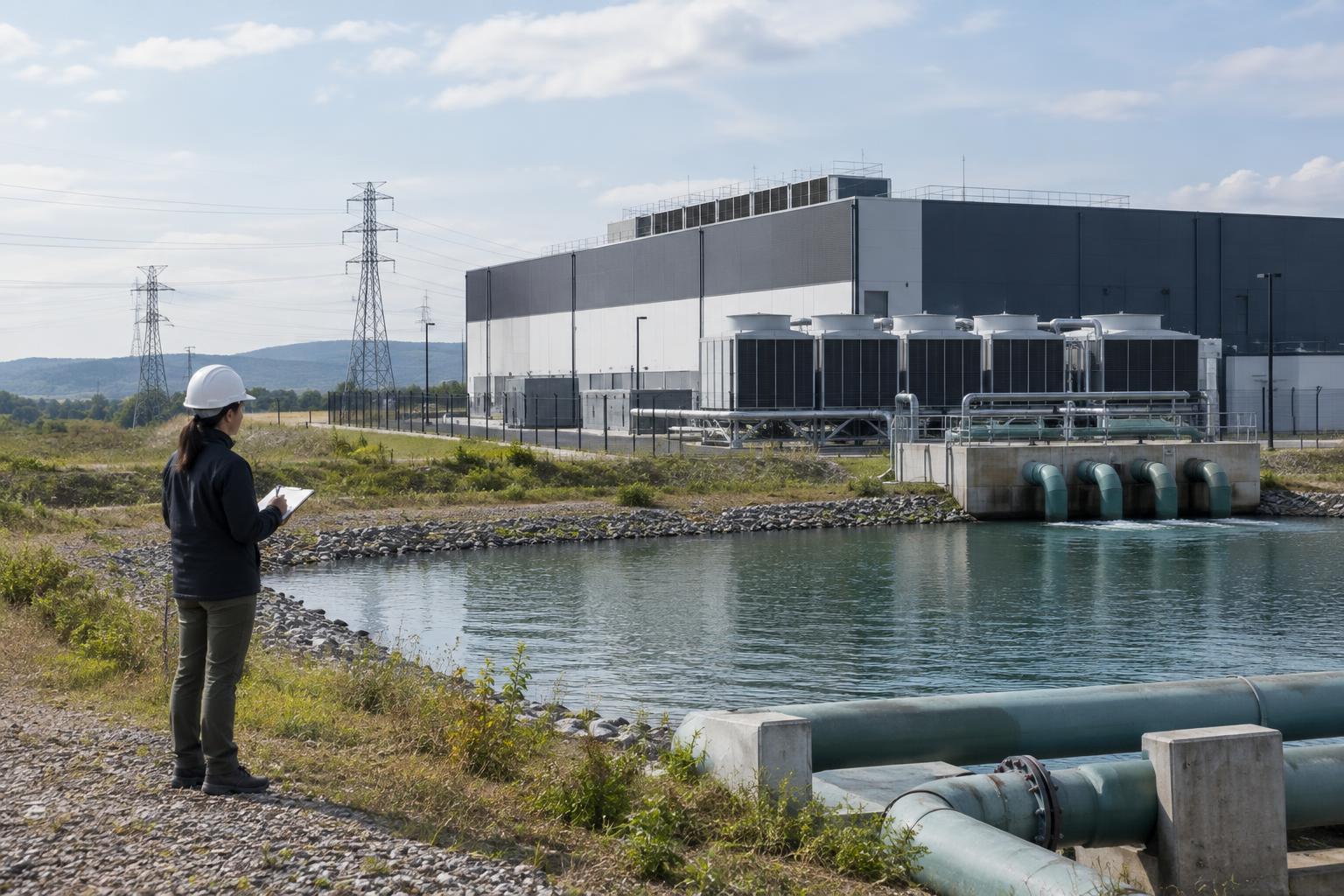
Water claims need their own definitions. Data centers may use water directly for cooling, depending on their design. Electricity generation can also involve water use, so an estimate may include indirect water associated with the power supply. Hardware manufacturing adds another possible boundary. A headline about “AI water use” is hard to interpret unless it says which of these it covers.
It also matters whether a figure describes water withdrawn or water consumed. Withdrawal is water taken from a source; consumption generally refers to the portion not returned to that source in a readily available form. The distinction affects what a number can tell you about local water pressure.
Location and timing matter, too. Cooling methods, weather, power sources and local water conditions differ. The same estimated volume may have different implications in a water-stressed area than in a place with more available supply. A global average cannot, by itself, explain a particular facility’s local impact.
Check comparisons and uncertainty
Analogies such as “one prompt equals one household activity” can make an abstract estimate easier to picture, but they can also hide mismatched assumptions. Ask whether both sides of the comparison use the same time frame and measure the same kind of impact. Electricity used at a data center, for example, is not the same measure as the resulting emissions; emissions also depend on how that electricity is produced.
Look for a range or a description of uncertainty rather than treating extra decimal places as proof of accuracy. Some providers disclose more about their systems than others, and outside observers may have to estimate from incomplete information. Even a carefully calculated number may change when the model, hardware, usage pattern or facility changes.
Broad claims deserve the same scrutiny. A service’s total footprint depends partly on how often people use it, not just how efficient an individual request becomes. Greater efficiency can lower the cost of a given task without necessarily lowering overall demand.
Use a simple checklist before sharing a claim
First, identify the unit: is the claim about one request, a model’s training run, a data center or a whole service? Next, identify what is counted: computing electricity, facility overhead, water for cooling, indirect water, or hardware production. Then check the workload, location, period and method. If those details are missing, the claim may still raise a worthwhile question, but it cannot support a precise conclusion.
Finally, ask what decision the estimate is meant to inform. For an individual, avoiding unnecessary repeated requests and choosing a task-appropriate tool are practical ways to limit avoidable use. For a small team, clearer workflows and attention to provider disclosures may be more useful than an unsupported “cost per prompt” figure. Responsible discussion does not require dismissing AI’s resource use—or exaggerating what a single estimate proves.