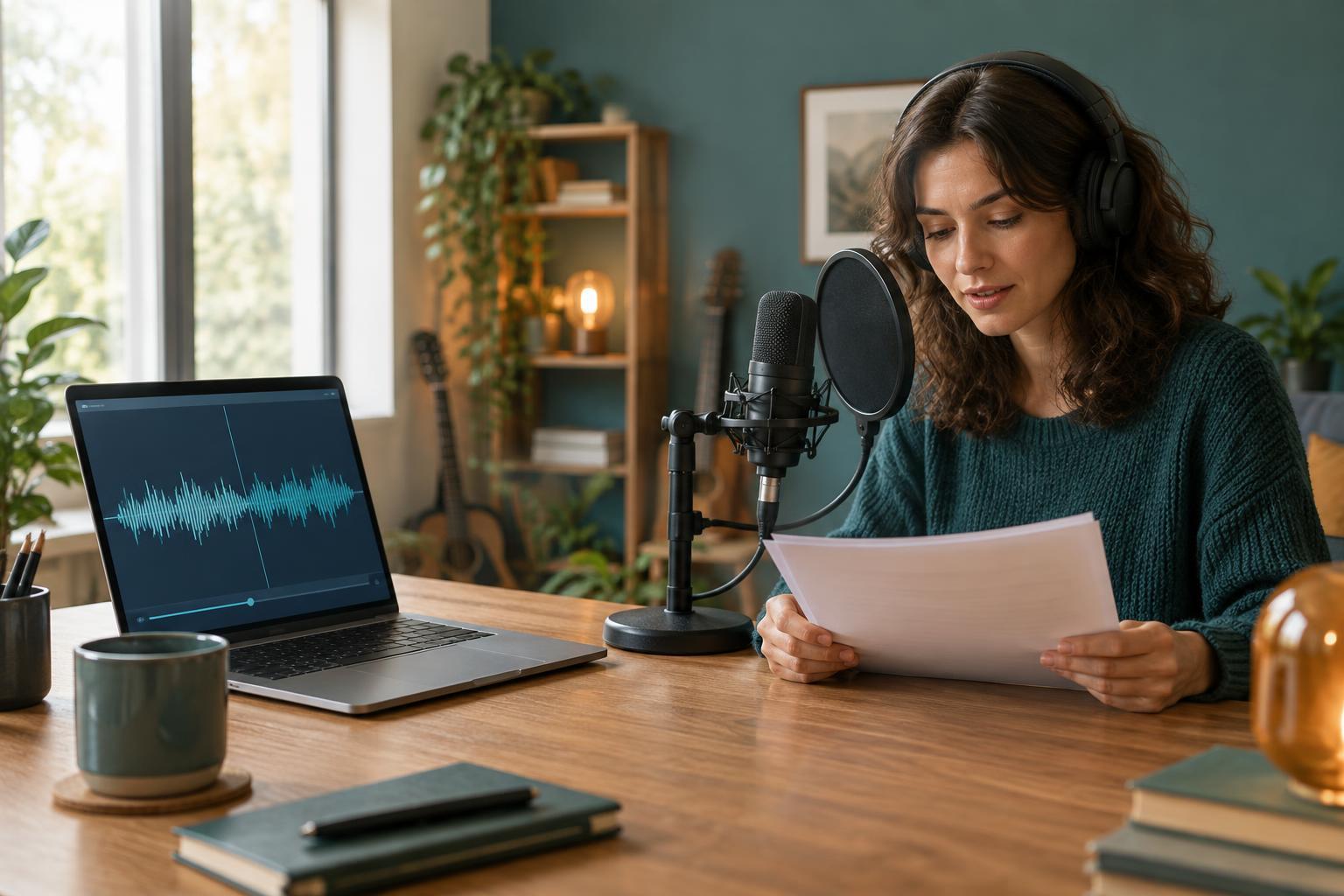
Start with what the voice needs to do
A voice does more than read words aloud. In a story, it may establish character and tension. In an instructional video, it may need to make unfamiliar steps easy to follow. Before choosing a narrator, write down the job the voice must perform: explain, entertain, reassure, create atmosphere, or guide someone through an action.
Then consider where listeners will hear it. A quiet audio story leaves little room for unclear delivery. A short video with captions and strong visuals may ask less of its narration. If the voice is central to the experience, small differences in pacing and emphasis matter more. If it mainly supports images or provides a temporary guide during editing, flexibility may matter more than a distinctive performance.
What AI text-to-speech does well
Text-to-speech systems generate audio from written text, often with a choice of voices and controls for features such as pace or pronunciation. For a creator working alone, the immediate benefit is speed: you can listen to a script, notice awkward phrasing, revise it, and generate another version without arranging a recording session. This makes AI speech particularly useful for prototypes, drafts, and projects whose wording changes frequently.
It can also help maintain a consistent delivery across small updates. If you add a sentence to an explainer, you may be able to generate it in a similar voice. The result is not guaranteed to match perfectly, though. Tools differ in how they handle pauses, names, unusual vocabulary, dialogue, and emotional shifts. A line that looks clear on the page may sound flat or place emphasis on the wrong word. Treat the output as audio that needs listening and editing, not as a finished recording simply because the script is finished.
Where a human performance earns its place
A human narrator can interpret intent, not just wording. They can ask why a character hesitates, make a repeated phrase feel different the second time, or adjust their delivery to suit a scene. That collaboration can be valuable for fiction, intimate essays, character-led videos, and work in which tone carries much of the meaning. A narrator may also spot a sentence that is difficult to say or suggest a more natural rhythm.
Human recording has practical costs. You need time to brief the narrator, record, review takes, and request pickups if the script changes. Room sound, microphone technique, and editing also affect the result. A human voice is not automatically the better choice for every project; a rushed or poorly directed recording may serve the audience less well than carefully reviewed synthetic speech.
Run a fair test before committing
Choose a short passage that represents the hardest part of your project, not the easiest. Include a proper name, a sentence requiring precise emphasis, and a change in tone if those appear in the full script. Produce an AI version and, if feasible, a human sample from the same text. Listen without watching the visuals first, then listen in the context where the audio will appear.
Ask specific questions: Can you understand every word at the intended playback speed? Does the voice signal the right emotion without overstating it? Are pauses helping the listener follow the thought? Does the delivery still work after repeated listening? Keep a list of fixes and estimate how much effort each route would take across the whole project. If an AI voice needs extensive sentence-by-sentence adjustment, its initial speed may not translate into a faster finish.
Make the choice responsibly
Check what you are permitted to do with any voice you use. A human narrator should understand the intended uses of the recording, including whether you want to edit it, reuse it, or create additional material later. With an AI service, review the permissions that apply to its voices and to any script or audio you upload. Do not imitate an identifiable person’s voice without their informed permission.
Finally, decide whether your audience needs to know how the voice was made. Disclosure may be especially helpful when a synthetic voice could be mistaken for a real person or when authenticity is part of the work’s appeal. You can also combine approaches: use AI speech to test timing and script clarity, then bring in a human narrator for the final performance. Choose the method that best serves the listener, and review the finished audio with the same care either way.